Take teaching as the core
The institution continues to advance teaching innovation through strengthened policies, curriculum optimization, and the integration of digital technologies. These efforts aim to deepen interdisciplinary competencies, enhance the quality of digital instruction, and reinforce teacher preparation and student learning support, ultimately fostering a more comprehensive teaching and learning environment.
Project 1-1|Strengthening Cross-Disciplinary Practice Platforms to Create a New Paradigm of Self-Directed Learning
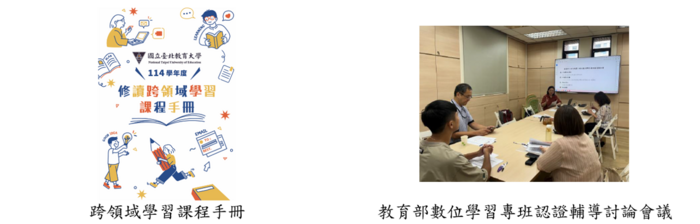
- The Regulations for the Establishment of Credit Programs were revised, and cross-disciplinary course subsidy schemes were promoted to encourage departmental collaboration and interdisciplinary talent cultivation. A Cross-Disciplinary Learning Course Handbook was compiled to guide students' learning. Two cross-disciplinary program proposals were approved, and four faculty members were funded under the “Top 30 Courses” initiative. A Cross-Disciplinary and Self-Directed Learning Expo was held from December 4–6 to showcase students’ interdisciplinary achievements and independent inquiry capabilities.
- Applications for the Ministry of Education’s digital course certification resulted in two courses approved in the first cohort and two in the second cohort of 2024, followed by one additional certified course in the first cohort of 2025, totaling five certified courses. A digital learning graduate program in Educational Law was launched, and advisory and review meetings were convened in response to certification results to enhance program quality and execution effectiveness.
Project 1-2|Strengthening the Foundations of Holistic Literacy to Cultivate Diverse General Education Talent
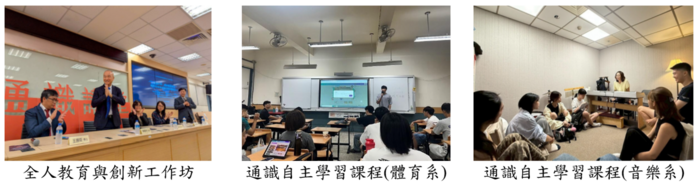
- Five integrative general education courses—such as AI in Daily Life and AI Teaching Applications—were offered to foster interdisciplinary thinking and competence-based learning. Five workshops on holistic education and instructional innovation were conducted to enhance students' critical thinking and learning strategy application.
- An English Communication Micro-Credit Program (14 courses) was launched, along with two new micro-credit programs in International Peace and Artificial Intelligence, each consisting of four courses to strengthen students’ global awareness, leadership, and teamwork skills.
- General education self-directed learning courses were promoted, with the Departments of Music and Physical Education offering two independent study projects to enhance students’ inquiry and problem-solving abilities.
Project 1-3|Advancing Faculty Development Portfolios to Drive Professional Growth
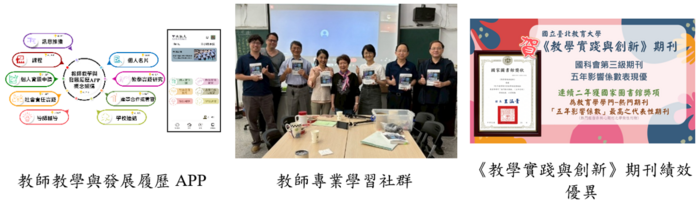
- A Faculty Teaching and Development Portfolio App was developed to integrate teaching achievements, research records, and professional development trajectories, improving the efficiency of faculty career management. One orientation and one workshop for new faculty were held, featuring Professor Hsin-Cheng Yeh sharing insights on sustainable education. Eight new faculty members completed mentorship consultations; 20 faculty learning communities were funded; and three open classes were conducted, all receiving satisfaction ratings above 4.7.
- Seventeen faculty members were subsidized to attend external professional development activities, accumulating 500 total training hours. A total of 22 Teaching Practice Research Projects were approved (67% approval rate), increasing journal visibility.
- The institution received the “Popular Journal Communication Award” and the Teaching Practice and Innovation journal achieved the top five-year impact factor ranking. Multiple teaching support measures contributed to maintaining an overall teaching evaluation satisfaction rate of 99.89% (above 4.0).
Project 1-4|Integrating Diverse Guidance Methods to Build a Smart Counseling Model
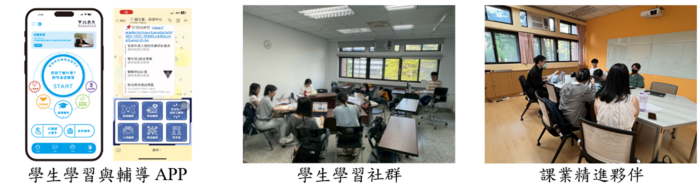
- The Student Learning and Counseling App was developed to integrate learning information, early-warning mechanisms, and student progress data, enhancing data connectivity and visualization. The app includes course advising, academic counseling, learning alerts, psychological counseling, and career guidance resources, enabling students to access support as needed.
- To promote diverse and autonomous learning, 66 student learning communities were approved with 456 participants (satisfaction above 4.7), leveraging peer learning and knowledge-sharing.
- To encourage proactive help-seeking behaviors, 12 tutoring partner groups were approved, providing one-to-one or group academic counseling and peer learning support for 82 students (satisfaction above 4.9), strengthening the institution’s self-directed learning support system.
Project 1-5|Strengthening Digital Development Facilities to Build a New AI-Enhanced Teaching Environment
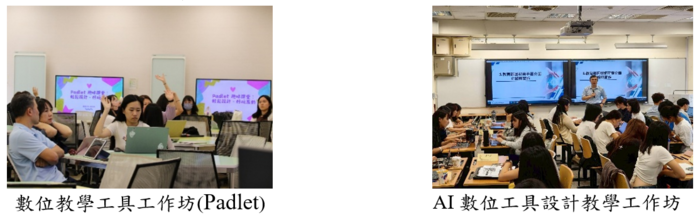
- An Apple RTC Center was established, offering six workshops on digital teaching tools (satisfaction above 4.5). A total of 81 Apple Teacher series modules were made available to enrich digital teaching materials. The Educational Technology Application Design Competition attracted 21 teams (49 students), enhancing students’ digital content creation skills.
- Licenses for Uptale VR, Padlet, and Kahoot were provided to 20 faculty members to promote AI-assisted teaching. Workshops on AI digital tools were held, helping pre-service teachers develop 47 AI-based lesson plans. The teacher qualification exam pass rate reached 69.54%, exceeding the national average.
Project 1-6|Enhancing International Cultural Exchange and Expanding the Global Education Network
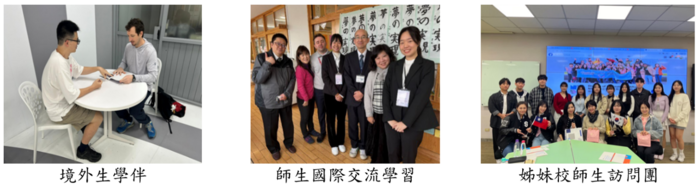
- An Office of International Affairs was established to coordinate international cooperation and support international students. Three short-term master lectures were conducted, and 54 international student buddy pairs were formed (satisfaction 4.6).
- The international buddy program increased foreign students’ participation in VIP reception services to 50%, promoting intercultural exchange.
- Six cultural experience grants were completed (satisfaction 4.5), along with three reciprocal exchanges with partner institutions. Various international cultural events were held, including traditional culture workshops, adaptation activities, arts/sports competitions, and holiday celebrations.
Fulfill social responsibility
By integrating educational expertise, community culture, and technological applications, the institution promotes diverse social engagement initiatives to enhance regional connections, foster shared prosperity, and fulfill social responsibility.
Project 2-1|Building an Interactive and Mutual-Support Network for a Resilient Smart Campus
- A Center for Social Responsibility Practice and Promotion was established, hosting three thematic lectures and one administrative meeting to complete institutional setup. Environmental and natural sciences courses were offered to strengthen the foundations of sustainability education.
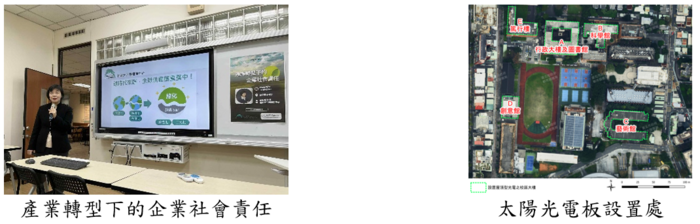
- A smart resilient campus system was implemented, including electricity management and air-conditioning control. Solar panels were installed in several buildings to improve energy efficiency and environmental resilience.
Project 2-2|Cross-Sector Collaboration for Positive Development and Innovative Leadership Cultivation
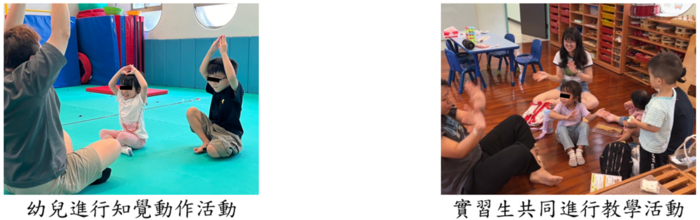
- Four SEL and ethics education workshops were held for rural teachers, helping six teachers integrate SEL competencies into instruction. Perceptual-motor and cognitive courses (230 participants) improved children’s attention, coordination, and cognitive performance.
- Four parent–child community activities (140 participants) and three children’s lectures (150 participants) were conducted, with an average satisfaction score of 4.2. Four interns participated in co-teaching activities through the internship preparation program.
Project 2-3|Integrating Art Education and Community Development for Sustainable Cultural Revitalization
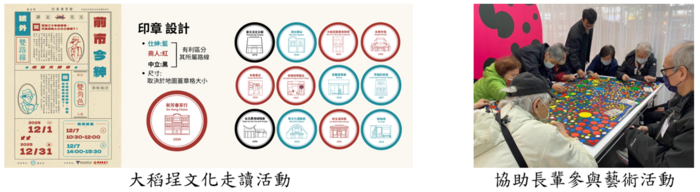
- Community revitalization and cultural sustainability efforts in Dadaocheng were advanced through the digital development of a historical building map and thematic cultural walking tours.
- Through the course Art Design and Social Practice, students helped elders at Guting Church participate in art activities, engaging 163 participants. The “Active Aging Service Club” was established to provide sustained student involvement in community arts initiatives.
Project 2-4|STEM-Based Social Practice and Community Partnership Development
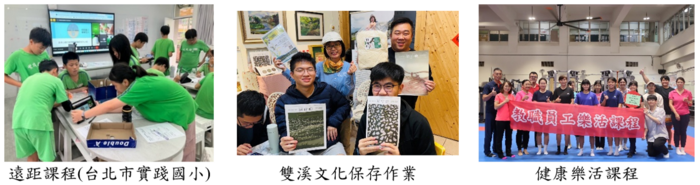
- A diverse teaching faculty community developed four distance-learning modules (three adapted into asynchronous materials) and delivered 14 remote lessons across 16 schools, serving 348 participants.
- The Shuangxi cultural preservation project continued, supporting historical building restoration, cultural tour planning, and digital archiving. A mixed-reality ecological tourism game attracted 200 participants. A memorandum with Taipei Lide Kindergarten was signed to promote local cultural learning.
- A 10-week wellness course series engaged 215 participants; AED+CPR training was attended by 25 individuals; and 20 volleyball league matches engaged over 100 participants. Student referees achieved a 100% participation rate.
Project 2-5|Empowering Rural Education through Tutoring and Expanding International Service Learning
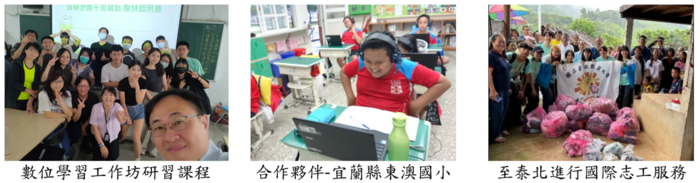
- Collaboration with the Smart Education Teacher Training Alliance led to the formation of digital tutoring teams and the organization of digital learning workshops.
- The adaptive AI tutoring platform was implemented in partnership with Dong’ao Elementary School in Yilan, enabling four university volunteers to support 13 students via remote tutoring throughout the year.
- Nine students provided international educational and cultural services across two schools and two communities in cooperation with the Ministry of Education Youth Development Administration and the Overseas Community Affairs Council, benefiting 230 local residents.
Industry-University Cooperation
Through interdisciplinary partnerships, internship programs, and international competitions, the institution strengthens students’ practical competencies, enhances career readiness, and fosters innovative industry engagement.
Project 3-1|Advancing Cross-Disciplinary Industry–Academia Practice to Build a Collaborative Innovation Platform
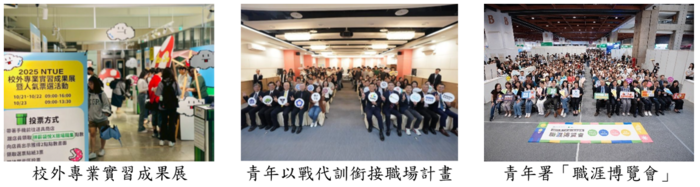
- An Industry–Academia Collaboration Center was established to coordinate strategies and resources. Regulations for domestic and overseas internships were revised across all departments, achieving a 100% completion rate. An internship exhibition and student-choice awards were held to encourage participation.
- An MOU was signed with the Taipei City Government for the “Youth Training-to-Work Program,” together with collaborations with the SME Association and the Institute for Information Industry. These partnerships increased internship and employment opportunities, raising internship participation to 11.8%.
- Students were guided to participate in three major international career fairs, including the NCCU, NTNU, and Youth Development Administration fairs.
Project 3-2|Industry–Academia Innovation to Open New Frontiers
- Two innovation and competition training workshops were held, supporting students in producing five作品 and winning three first prizes in international competitions. Fifty students completed cultural and creative industry internships offered by six companies.
- A cross-disciplinary educational partnership was established with International Digital Sense Education Co., Ltd., integrating mathematics, information science, and education to produce elementary mathematics and interdisciplinary instructional videos.
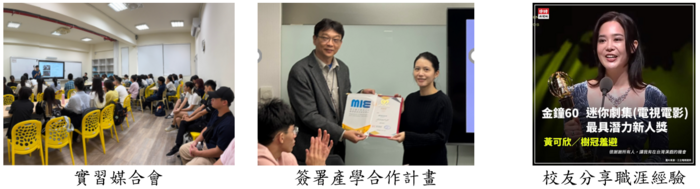
- Corporate visits and cultural courses were organized to deepen students’ understanding of Taiwanese culture and industry. Alumni shared career insights, including the Thai alumnus Huang Kexin, winner of the 60th Golden Bell Award for Best Emerging Actor in a Miniseries.
Project 3-3|Corporate Internships and Student Talent Cultivation
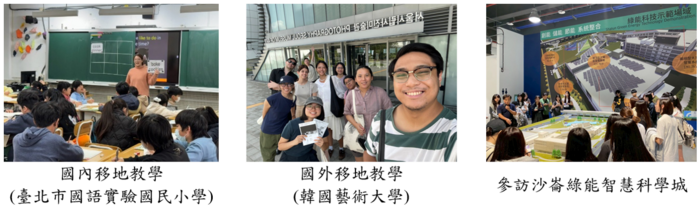
- Five thematic lectures, three field-teaching activities, and one international symposium were conducted to support students’ practical learning in local and overseas educational settings.
- Fifteen lectures, three field-teaching sessions, and one graduation exhibition supported the development of contemporary art criticism and curatorial skills. Two academic–industry MOUs were signed. AI design talent programs offered two courses and two lectures to enhance creative–technological integration.
- Water resource sustainability courses and program activities involved site visits and laboratory analysis practice to strengthen students’ technical competencies.
Project 3-4|AI Talent Development: “72 Apprentices” to Create New Technological Opportunities
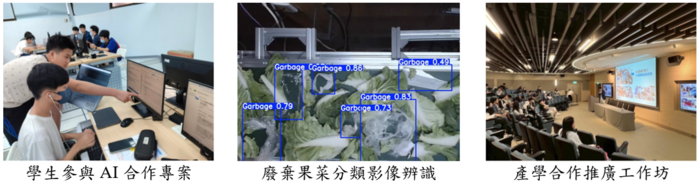
- Students were trained and matched with AI collaborative projects. Twenty-nine students were supported in obtaining the Junior AI Application Planner Certification, becoming the first cohort of “72 Apprentices.”
- An industry partnership with agricultural technology companies supported the development of an AI-based fruit-and-vegetable waste sorting model integrated with laser galvanometer marking systems to enhance operational efficiency and future smart process applications.
- Four industry–academia workshops, one AI education promotion event, and one AI camp were held to strengthen technological competencies among students and faculty.
Make resources more public
Through governance improvements, sustainability management, support for disadvantaged students, and strengthened information security, the institution reinforces the public mission of higher education and fulfills institutional social responsibility.
Project 4-1|Strengthening Institutional Governance for Sustainable Development
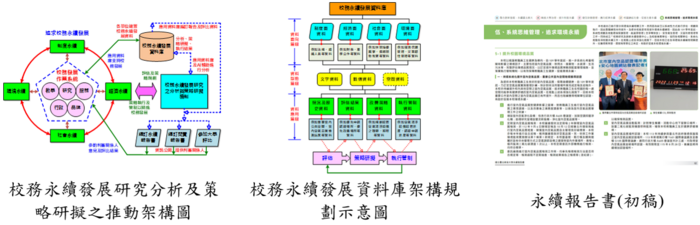
- An institutional research mechanism for innovative campus sustainability analysis and strategy development was established, including the initial adoption of AI-assisted analytics to enhance institutional performance.
- A sustainability database aligned with five administrative systems and four sustainability dimensions is being developed in phases to support long-term governance.
- A sustainability report was compiled based on principles across institutional, economic, social, and environmental dimensions to clearly communicate the institution’s vision and achievements.
Project 4-2|Increasing Access for Disadvantaged Students and Enhancing Academic Support
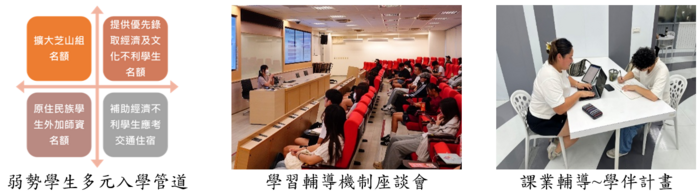
- Multiple admission pathways were provided for disadvantaged groups: 37 economically or culturally disadvantaged students were admitted through priority review; 17 additional spots were added under the “Zhishan Track”; and 56 Indigenous students were admitted through additional quotas. Exam fees were subsidized for nine economically disadvantaged applicants.
- A rolling academic support system reduced the work-study burden for disadvantaged students, with 209 students supported (744 service instances). Academic counseling and Indigenous language courses improved access to learning resources.
- Supported students achieved an average score of 84.12 compared to 79.44 among unsupported peers, reflecting a 5% performance increase. Fifty-eight Indigenous pre-service teachers were trained.
Project 4-3|Enhancing Indigenous Student Support and Promoting Indigenous Education for All
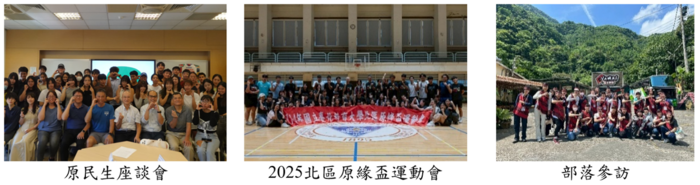
- Support measures included university-wide meetings with Indigenous students, 52 tutoring pairs, and two Indigenous language courses, benefiting 52 students—a 52.94% increase.
- The “2025 Northern Region Indigenous Cup Games” was held, bringing together nearly 70 Indigenous students from various institutions.
- Twenty-one cultural activities—including courses, lectures, workshops, and tribal visits—were conducted with 853 total participants (48.8% increase), fostering cultural understanding and a more inclusive campus.
Project 4-4|Building a Smart, Resilient, and Digitized Information Campus
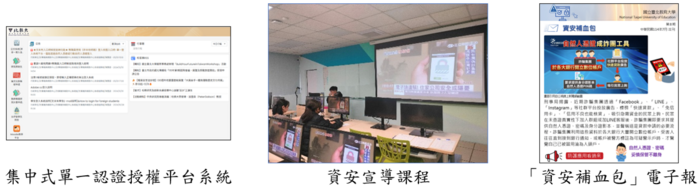
- ISMS and PIMS frameworks were implemented, with three administrative units completing certification in 2025. Eighty percent of unit websites were integrated into a unified framework, and a centralized single-sign-on platform was established. Two rounds of server vulnerability scanning were conducted to enhance cybersecurity resilience.
- Cybersecurity awareness was promoted through newsletters, social media, and instructional videos.
- Five training sessions on data protection and information security were held to strengthen digital resilience across campus.