Summary of Goal Achievement and Highlights
I. Teaching Innovation and Refinement: Main Axis Plan 1 – Development of School Characteristics (Self-directed Learning, Strong Generation, Residential College Education)
- 1. Dream Academy: Strong Generation (Active Senior) Learning Program
- Curriculum Adaptation: In response to mixed-age learning, the curriculum design and teaching methods have been flexibly adjusted.
- Digital Empowerment: To strengthen the digital tool capabilities of senior students, the syllabi for general education courses such as "Computational Thinking and Digital Literacy" have been revised and improved. Additionally, introductory tutoring for digital tools is provided, covering basic computer and internet usage, as well as skills for Word, PDF, and PowerPoint.
- Environment Upgrades: Teaching buildings and dormitory spaces are undergoing renovation. Improvements include upgrading computer lab screens in the Library and Information Building to 27-inch large monitors, converting select dormitory beds to "lower-bunk double rooms," and installing assistive devices such as seated toilets, grab bars, and seats in restrooms.
- 2. Dream Academy: Self-directed Learning Experimental Education Program
- Project-Based Learning: A school-wide "Project-based Learning Curriculum" has been implemented. Students can set their own learning schedules according to their own pace, unrestricted by semester start and end dates. In Year 114 (2025), students proposed a total of 14 "Project-based Learning Plans".
- Autonomous Course Fundraising: The "Autonomous Course Fundraising Plan" allows students (individually or in teams) to design course content and learning methods under teacher guidance, fostering self-directed learning abilities with financial subsidies available. In Year 114, 12 applications for "Autonomous Learning Fundraising" courses were submitted.
- Faculty Support: To develop counseling capabilities, a "Self-directed Learning Counseling Teacher Group" and a "Self-directed Learning Teacher Growth Community" have been established. Workshops are held to explore self-directed learning methods and the development of teaching competencies.
- 3. Residential College: Co-constructing an Intergenerational Integrated Learning Environment and Life Education
- Learning Activities: In addition to daily care, Residential College tutors provide "Life Curriculum" counseling twice a month, covering six major categories: Information, Design, Sports/Psychological Interviews, Fine Arts, Extracurricular Reading, and Professional Interests.
- Campus Co-operation: Promoting joint campus maintenance using the "CO-OP" (cooperation-collaboration) model. Faculty and students participate in maintaining basic school life functions, providing students with the "Awareness Education Character Scholarship" through practical learning and work.
- 4. Residential College: Promoting Life Design and Reflection Schemes
- Mindfulness Practice: A mindfulness practice platform utilizes Zen classrooms, the "New Six Arts" spaces, and various workshops as practice fields, alongside organizing mindfulness workshops.
- Life Design and Reflection Week: The "Life Design and Reflection Week" continues to be expanded during the 10th week of every semester. All classes across the university are suspended from Monday to Friday, allowing teachers to lead (or students to learn) how to design their own lives. Afterward, students submit a Life Design and Reflection Practice Report.

II. Teaching Innovation and Refinement: Main Axis Plan 2 – International Learning (Creating an International Campus, Cultivating International Mobility)
- 1. Expanding International Recruitment and Learning Exchange Scales
- International Recruitment: Recruitment of foreign, overseas Chinese, and exchange students has expanded, targeting Southeast Asian countries (specifically Vietnam and Indonesia) in fields such as Buddhist art, Asian humanities, Photography/VR, and Art/Design. Additionally, a Key Industry English Master's Program in the Department of Technology of Smart Living was established with full scholarships and on-campus work opportunities to recruit students from India, Pakistan, and Turkey. In the Spring and Fall semesters of Year 114, 25 international freshmen were recruited from 11 countries, including Indonesia, Vietnam, India, and Japan.
- International Exchange: To strengthen foreign language learning, 10 international study tour courses and 22 foreign language courses (English, Japanese, Spanish) were opened in Year 114. Exchange activities were conducted with sister schools such as KIIT University (India), Jinarakkhita Buddhist College (Indonesia), and Jiangnan University (China).
- 2. Promoting Cross-border Curriculum Cooperation and Material Co-construction
- International Faculty: Foreign full-time and adjunct faculty have been recruited to teach professional courses. Outstanding professors from sister schools were invited for short-term international courses. In Year 114, professors from Korea, Spain, and Japan were hired to teach 5 international courses.
- Curriculum Collaboration: Planning pilot courses for teaching cooperation and material co-construction continues. Through onsite or online co-teaching, faculty share and discuss teaching materials. In Year 114, onsite course cooperation was conducted with the University of Castilla-La Mancha (Spain) and Sapporo City University (Japan).
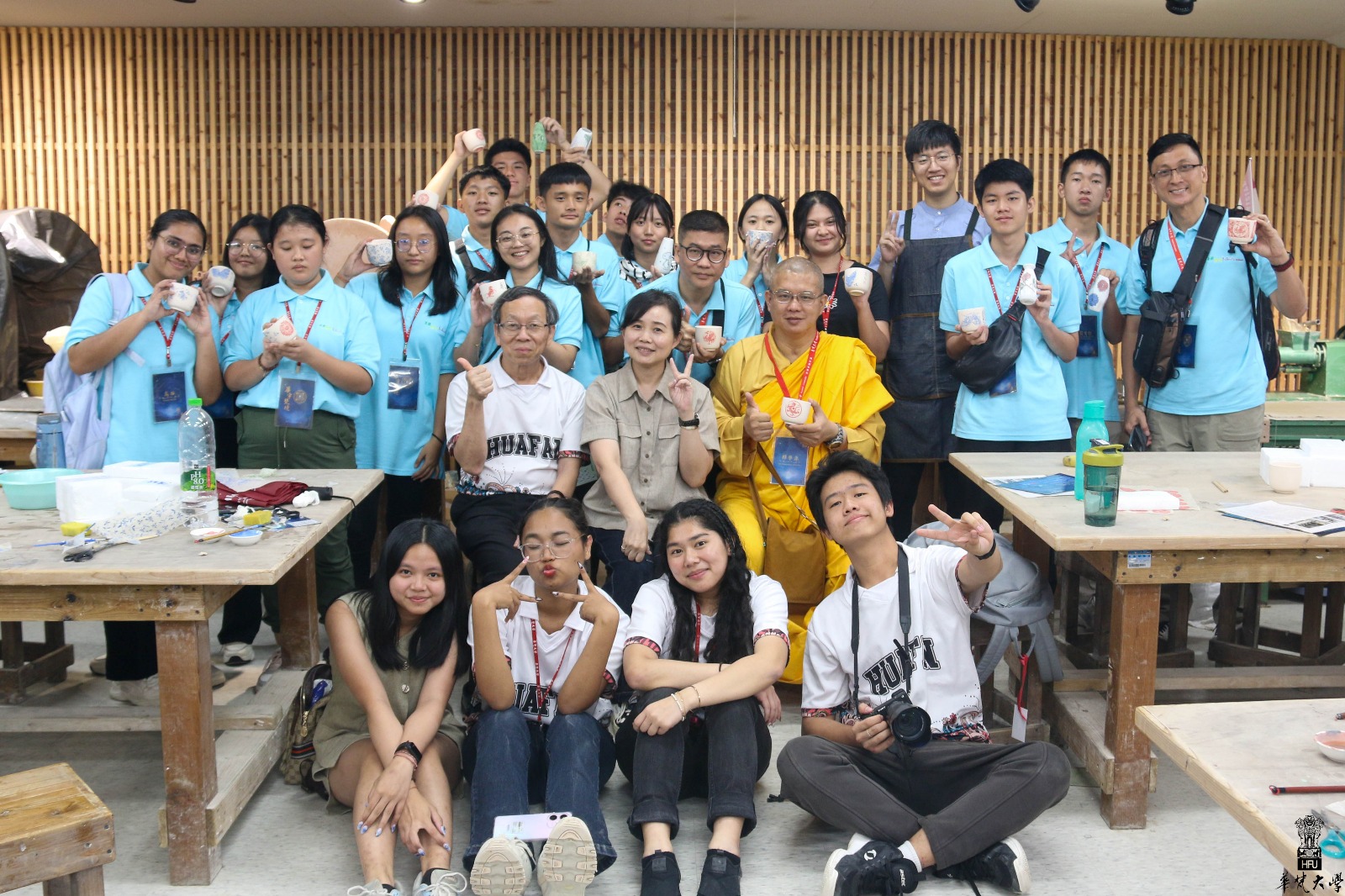
III. Industry-Academia Cooperation: Main Axis Plan 3 – Industry Linking and Cross-disciplinary Integration
- 1. Deepening the "School of Hundred Crafts" (Bai-Gong) Base
- Infrastructure: 33 thematic workshops involving the "School of Hundred Crafts" and the "Art Village" have been established, with space preparation and equipment installation completed.
- Industry Links: In Year 114, workshops engaged in industry-academia cooperation or public sector projects included the Ceramic 3D Printing Workshop, Wood Carving Workshop, Tea Ceremony Workshop, Art Creation and Curation Execution Studio, and the Big Data Smart War Room.
- Talent Development: To support workshop development, the "Innovative Co-learning Characteristic Talent Development Plan" proposed 21 projects in Year 114. Students receive a creation grant of up to NT$54,000 per person per semester and can earn up to 4 credits upon review. Supervising teachers receive a guidance fee of NT$8,000 per project.
- 2. Developing the Art Village Industry-Academia Base
- Artist-in-Residence: The program continues to invite outstanding domestic and international artists. In Year 114, 6 artists from 5 countries (Taiwan, Japan, Macau, India, and Korea) were invited to reside, teach, and lead faculty and students in creation.
- 3. Promoting Digital Humanities Cross-disciplinary Talent Cultivation
- Curriculum: Seven university-level "Digital Humanities Cross-disciplinary Module" courses were added to the general education plan, covering "Humanities/Art Design" and "Digital Smart Technology".
- Communities: A "Digital Humanities Cross-disciplinary Teacher Growth Community" and a student interaction community were established.
- Faculty Training: A "Huafan Faculty AI Empowerment" course was held with 56 faculty and staff participants.
- 4. Promoting Industry-Linked Learning and Cooperation
- Modular Learning: Cross-departmental module courses are developed using a "Honeycomb" structure (3-8 courses per module). Students must complete at least one cross-department professional module or 8 credits of external department courses.
- Customized Maps: The "MyWay" information system helps teachers guide students in planning exclusive, customized learning maps based on interests and development needs.
- Semiconductor Program: The Department of Technology for Smart Living opened a "Semiconductor IC Design Industry Linkage Employment Program," consisting of basic and advanced modules totaling approximately 30 credits, covering Analog and Digital IC design.
- Internships: Expanding the scale of off-campus internships and industry cooperation, Year 114 saw the execution of 10 industry cooperation plans, 3 public sector plans, and 10 students placed in off-campus internships.
IV. Fulfilling Social Responsibility (Main Axis Plan 4: Regional Revitalization – USR)
- 1. Execution of Two MOE "Sprout Type" USR Projects in Year 114:
- Man Man Hill: Art Intervention for Shiding Mountain Street Vitality Enhancement Project:
- Centered on "Man Man Hill," the project promotes the cultural regeneration and revitalization of Shiding's century-old stone houses. In Year 114, 4 seasonal workshops (Spring, Summer, Autumn, Winter) and 2 local art/craft exhibitions were held, and 8 entry-level Guqin teachers were trained.
- Shiding Placemaking: Practice Plan for the Danlan Old Trail and Yuguilin Region:
- Using "Festival Placemaking" to drive local travel innovation. Year 114 activities included 1 large-scale "Stream Stone Tea Party," 6 expert lectures, 11 travel innovation workshops, and 2 core courses on "Cultural Travel Innovation and Placemaking," continuing cross-disciplinary integration to cultivate cultural placemaking talent.
- 2. Additional Projects Promoted:
- Food and Agriculture Education: Green Agricultural Products and Humanistic Aesthetics:
- Based at the Yunshan Tea Art and Culture Center, 12 sessions of the "Calming Mind Seven Bowls of Tea" course were held. Centered on "outdoor tea tasting, DIY experiences, and local cuisine," the events were organized with Shiding tea farmers and community partners. The university also co-organized the "3rd Hundred People Plant Festival—New Taipei City Shiding District Year 114 Wutu Community Ecological Food and Agriculture Education Activity" to strengthen community links.
- Technology and Humanities: Drone Support for Community and Humanistic Ecological Care:
- Huafan students and locals were trained to pass academic and technical exams at the university's national exam venue to obtain drone licenses. Drones were used to support filming for the "3rd Hundred People Plant Festival" in Wutu Community, preserving complete records of the event.
- 3. Local Bases:
- Four local placemaking practice bases have been established in the Shiding area to assist local industry development: Man Man Hill, Travel Innovation School, Stone House Annex, and Yunshan Tea Art.
V. Enhancing the Public Nature of Higher Education
- An "Economically Disadvantaged Characteristic Talent Development Plan" is in place to provide student financial aid. An Indigenous Student Resource Center has been established to counsel Indigenous students in their studies and promote Indigenous culture.
VI. Achieved Highlights and Features
- Respecting individual differences, the university has shaped a friendly campus for self-directed learning, helping students discover themselves and reconstruct the meaning of learning. Complete learning clusters, including the "School of Hundred Crafts" and "Art Village," have been established. Through systems such as cross-disciplinary integration, innovative implementation, and cooperative co-learning, students are assisted in hands-on practices to regain a sense of achievement. Features such as the customized learning system, the self-directed learning experimental education plan, the Middle-aged Generation learning plan, and the life design plan for awakening the meaning of learning serve as highly potential models for an "Exquisite University".