Summary of Goal Achievement and Highlights
Aspect A : Innovation and Refinement in Teaching
Expansion of Interdisciplinary Learning Pathways: Revised the regulations for establishing credit programs to broaden the recognition of courses from the Ministry of Education or inter-university alliance programs. This increases opportunities for students to pursue interdisciplinary credit programs and diversify their course selection.
Establishment of "Implementation Guidelines for Rewarding Student Interdisciplinary Learning": Systematically integrated six major pathways—double majors, minors, credit programs, micro-credit programs, integrated Bachelor's-Master's/Doctoral programs, and self-directed learning—to encourage diversified student learning through a structured mechanism.
Focus on Smart Health/Interdisciplinary Topics: Cumulatively established 3 credit programs and 5 micro-credit programs focusing on smart health/interdisciplinary themes, with an accumulated enrollment of 112 person-times.
Growth in Teaching Practice Research Program (TPRP) Approval Rate: The number of approved TPRP projects increased by 40%. Notably, one teacher successfully combined the design of a University Social Responsibility (USR) course, securing funding from both the TPRP and a National Science and Technology Council (NSTC) project, achieving a trifecta of teaching, service, and research.
Aspect B: Fulfilling Social Responsibility (USR)
Increased Participation in Social Engagement Courses: Following the implementation of field days for interdisciplinary courses, enrollment in social engagement courses surged from 72 to 549 person-times (an over 7.6-fold increase). Over 90% of first and second-year students have taken social engagement courses, significantly enhancing students' social participation and empathy.
Expanded Partnership with Jin-Shan Senior High School: Organized the "Biomedical Exploration Camp." Through specialized experiences in optometry, speech-language science, and genetic medicine, the initiative promotes the downward extension of medical education in rural areas, bridging the educational gap for students along the North Coast and enhancing their competitiveness for admission to top universities.
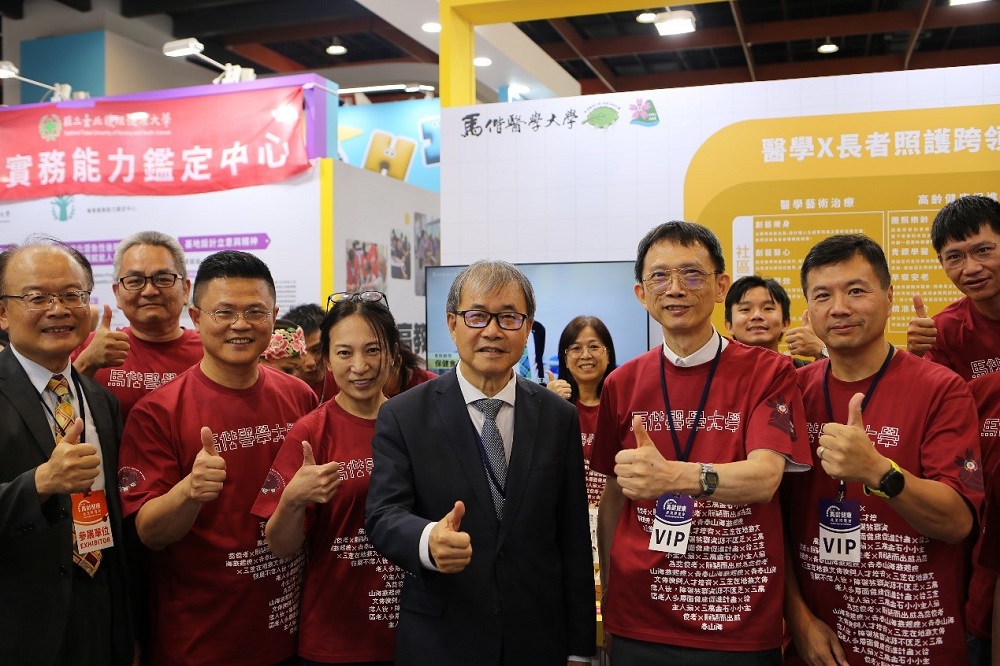
Recognition of USR Talent Cultivation Mechanism: The mechanism for cultivating USR talent, which integrates interdisciplinary learning with community practice, was affirmed by the Ministry of Education and led to an invitation to participate in the 2nd Aging and Health Industry Expo. This raised the university's visibility in talent cultivation for the aging and health industry.
Hosting of SROI-Themed SIG Forum: Organized a Shared Interest Group (SIG) forum focused on Social Return on Investment (SROI) to jointly explore the university's social impact management mechanism with stakeholders.
Aspect C: Industry-Academia Collaboration and Linkage
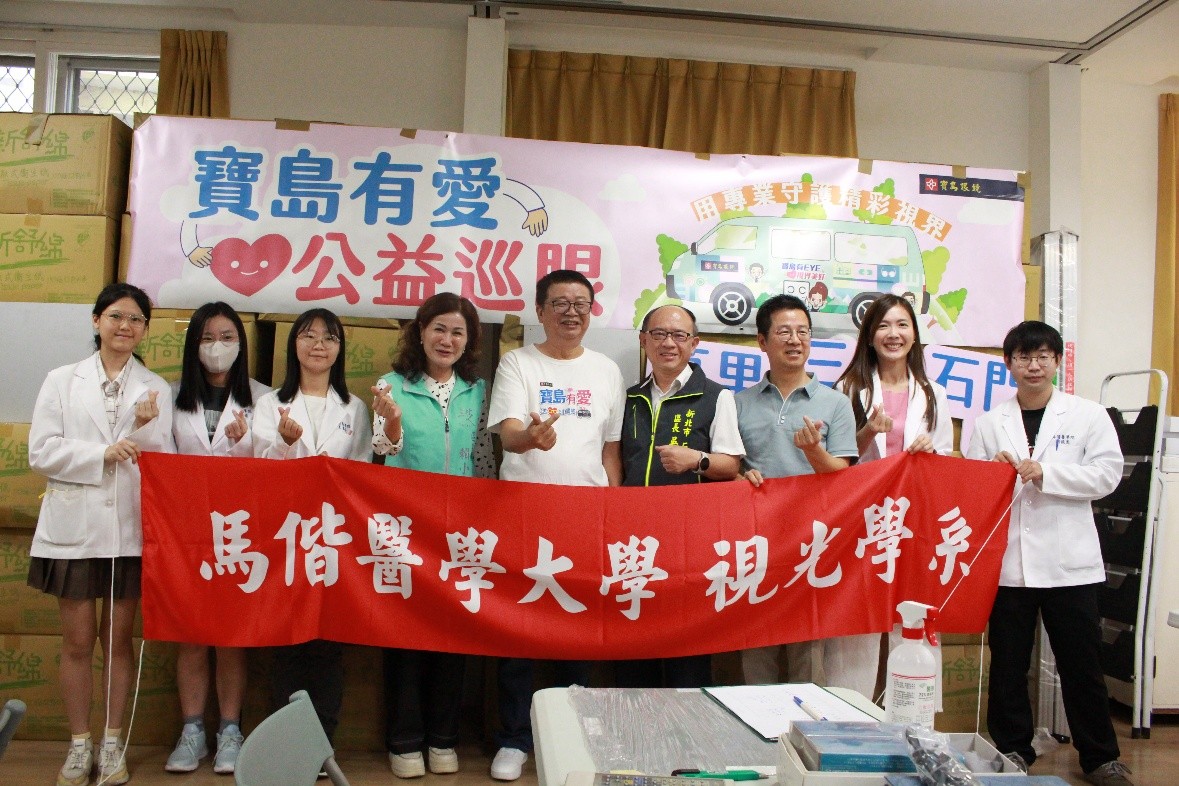
Collaboration with Formosa-optical : Partnered on the "Sending EYE to Remote Areas" initiative, combining professional services with industry resources to demonstrate the social value of industry-academia collaboration.
Application for NSTC Sprout Project and Participation in Innovation Competitions: The Department of Audiology and Speech-Language Pathology led students to apply for the NSTC Sprout Project with a focus on hearing loss health foods and related patents, and participated in innovation and entrepreneurship competitions to accelerate the real-world application of the developed products.
Preliminary Success in Smart Medical Device Interdisciplinary Practice: The Department of Optometry completed the assembly of a prototype eye fatigue detection instrument. It underwent localized field testing and functional verification within the Sanzhi community, demonstrating initial effectiveness in interdisciplinary practice for smart medical devices.
Aspect D: Enhancing Public Accountability of Higher Education
Establishment of Student Outcome Assessment Pattern: The institutional research team developed a student outcome assessment and tracking pattern that integrates course design improvement, student learning effectiveness, and graduate placement. This pattern serves as a reference for the self-improvement mechanism in departmental evaluations, becoming a practical benchmark for institutional research.
Significant Improvement in Special Admissions: The utilization rate of the special admissions quota significantly increased from 25% to 83.33%, with a 100% registration rate for two consecutive years. This proves the effectiveness of scholarships and guidance mechanisms in supporting economically disadvantaged students to maintain stable enrollment.
Visualization of Public Information and Enhanced Accountability: Visualized public information web pages for institutional and financial data. Developed an internal Deep Cultivation Project management and control system, introducing Measurability Assessment (EA) to strengthen the cost-benefit analysis and self-accountability.